A working concept · CathIQ™
Powering programs where the best case is always the next one.
CathIQ™ is a working concept I built myself: the brand, the clinician workflow, and the digital application suite that sits on top of a robotic system. The robot and its embedded software run the procedure and write the record. CathIQ is the layer above it: four applications on web and mobile where the clinician plans, gets help, trains, and reviews.
The demo is behind a login. Request access and I will send you the credentials.
The build
One person. A few weeks. Public information only.
I built CathIQ with a specific situation in mind: an endovascular robotics company entering coronary procedures. I also built it to be extensible to other robotic platforms and indications. Nothing in it belongs to any company. The name is trademarked, the domain is mine, and every screen, clip, and line of copy was made for this concept.
It is a way of showing what the digital layer on a new robotic system should look like from the first day, in enough detail that an engineer, a clinician, and a CEO can each argue with it.
Plan · Connect · Train · Review
Four applications. One portal. The layer the clinician actually opens.
Plan
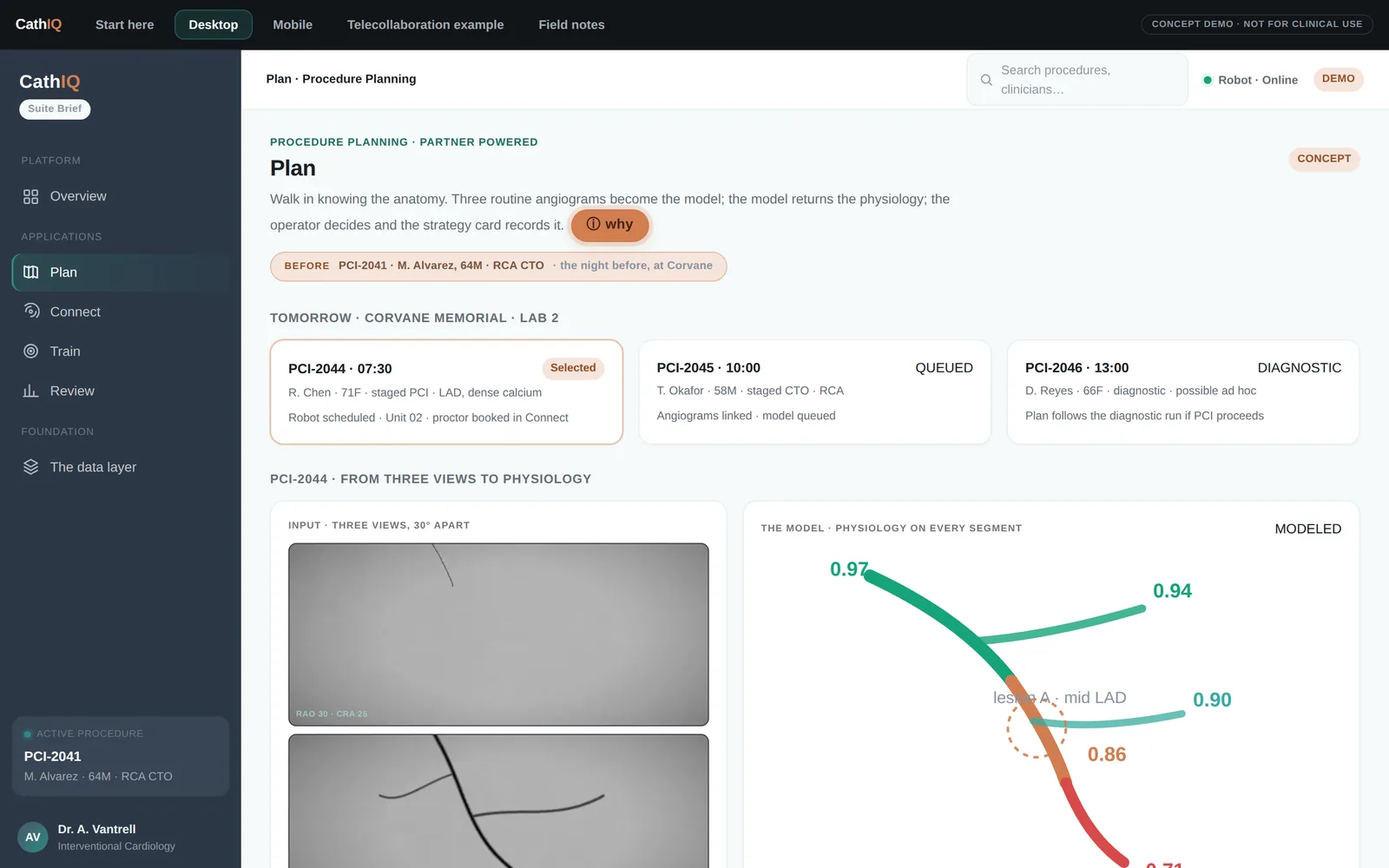
The clinician studies the anatomy from the imaging already on file, chooses the approach, and sets the plan the robot will carry into the room.
Connect
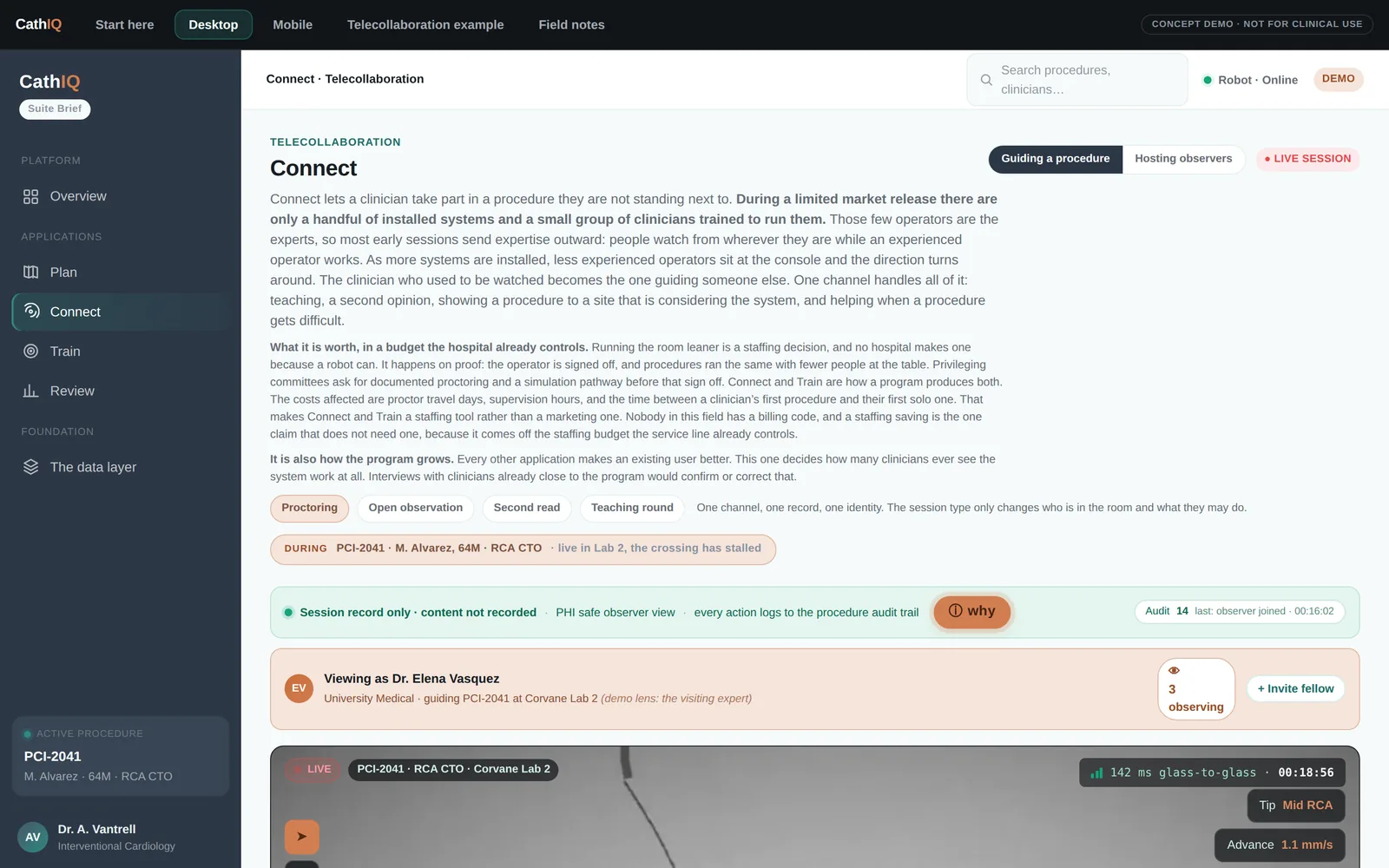
The clinician opens a line to a colleague, scheduled ahead or in the moment. Expertise travels both ways: a visiting expert can guide, and a room can host the people who should see the procedure. The conversation is not recorded. The session record, who joined and in what role, is kept.
Train
Simulation and rehearsal on the clinician's own anatomy, scored against benchmarks the hospital defines. The hospital defines the criteria and grants privileges. Train assembles the readiness record.
Review
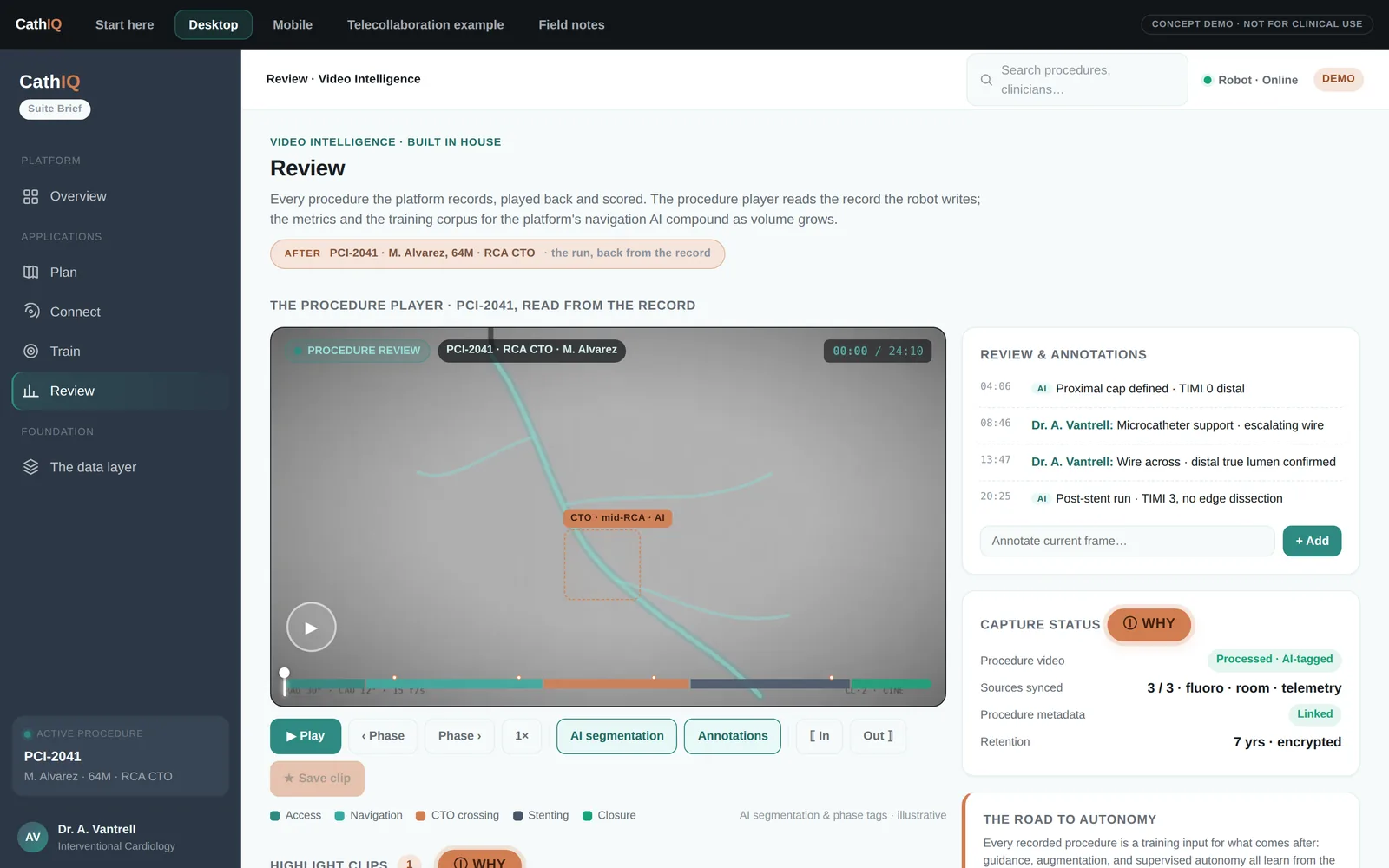
The run comes back segmented by phase, measured against the clinician's own baseline, with the marks and key moments from the session filed against the record.
The point of it
What it shows about how I work.
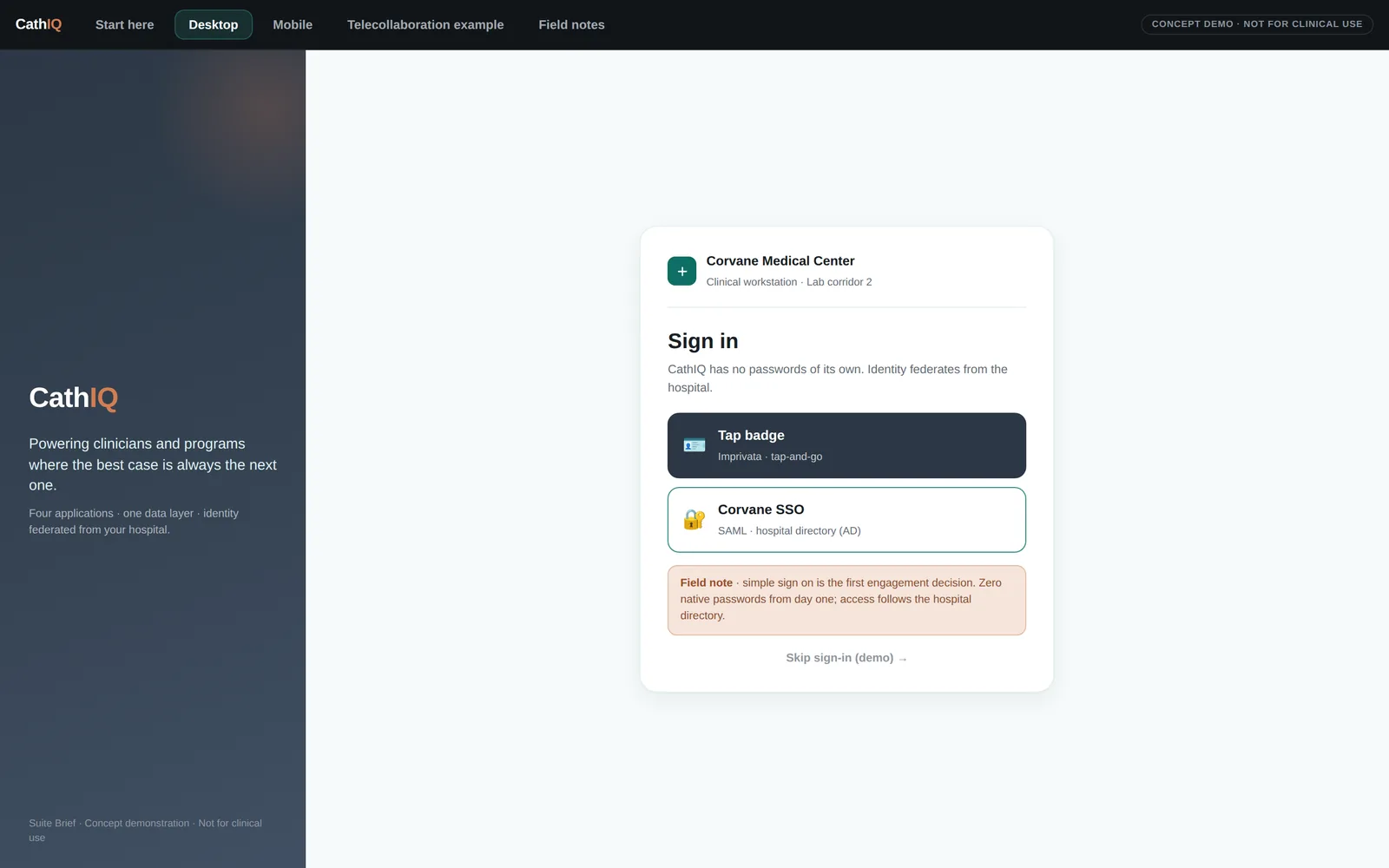
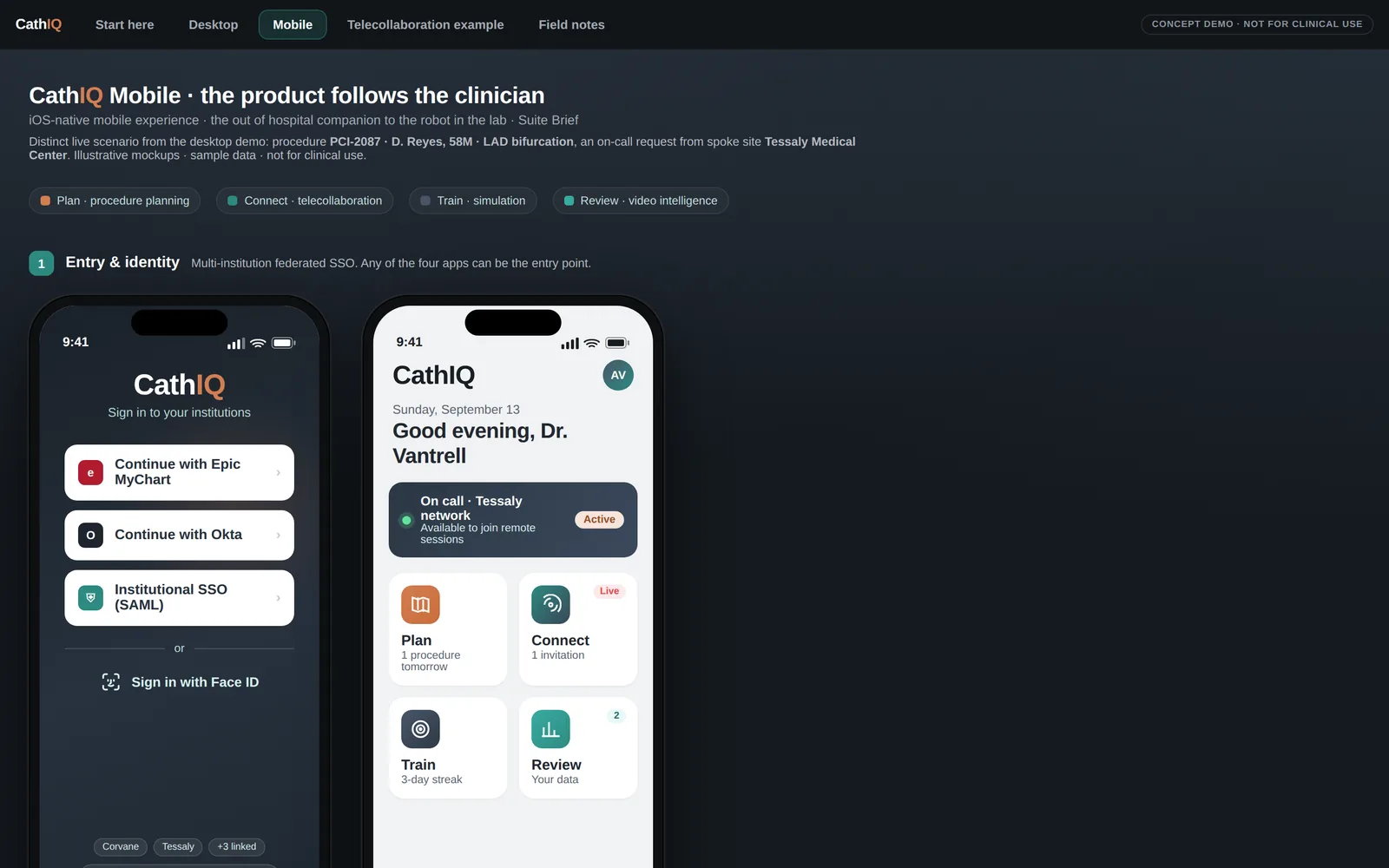
I start with the clinician's day. Sign in lands on today's procedure. The phone gets the moments that drive adoption: the evening notification, the booking, the line opened in the moment.
I decide early what the robot owns and what the layer owns, and I write it down. That boundary is the difference between a scope an engineering leader can hand over and a claim that reads as annexation.
I write claims the way the people who approve them will read them. The privileging committee keeps control of the review and the decision. The suite supplies the documentation trail.
I ship something people can click, because a working screen draws out the real objections faster than a slide does.
From the demo
A few screens.
Field notes
What makes a suite get used.
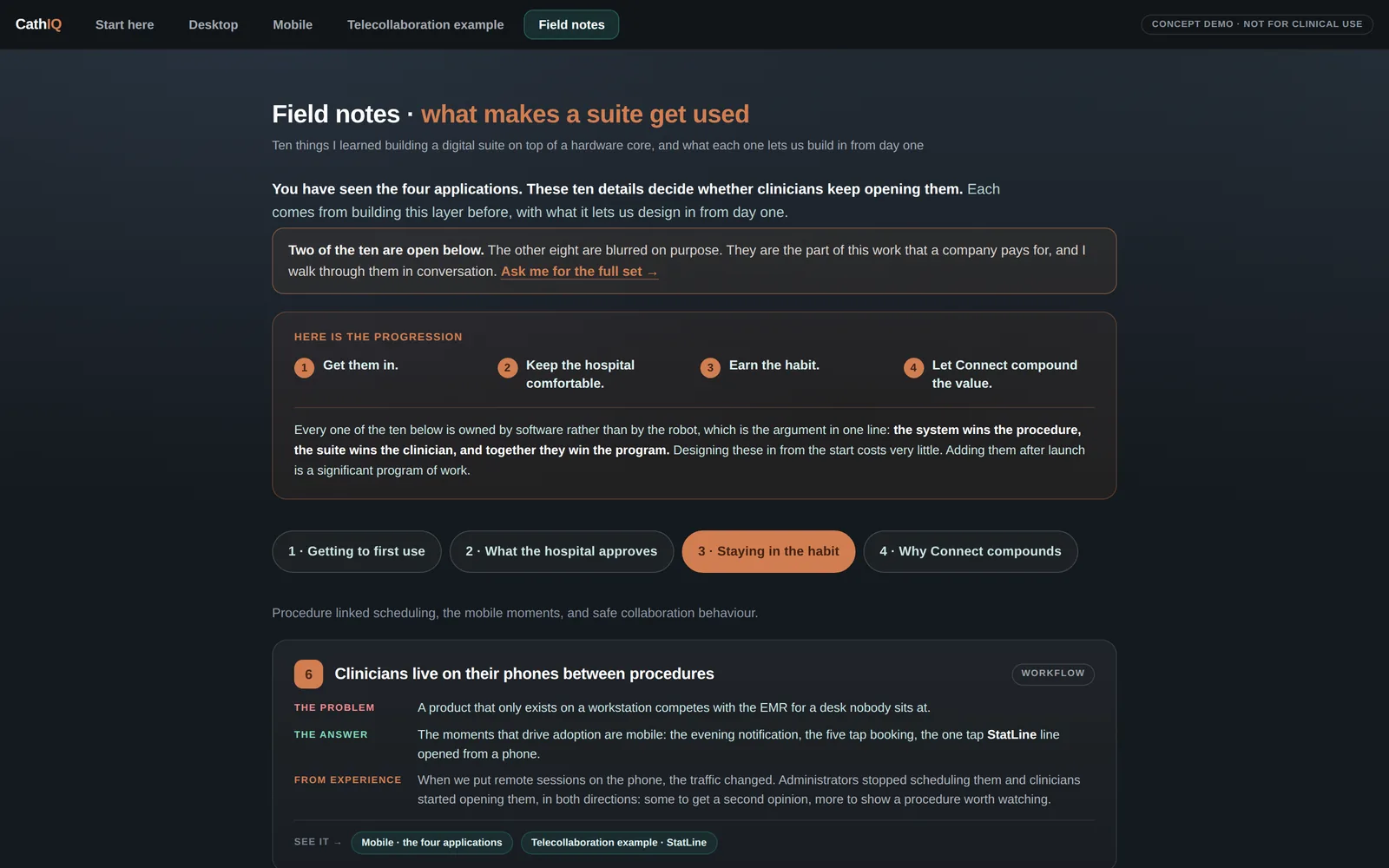
Ten field notes travel with the demo. They are the problems I have already hit building this kind of layer and what each one forced into the design: what stalls a launch, what hospital IT and biomed review, what clinicians quietly stop opening, and the one real decision, build or buy. People with demo access see two of them in full. The rest are the part of the work that a company pays for. Ask me and I will walk you through them.
Concept demonstration. Not for clinical use. All procedure media is illustrative or simulated. CathIQ is a trademark of Jake Isley.